Buying Guides
Custom Silicone Pet Products: Logo Printing, Custom Colors or a New Mold?
Compare logo printing, custom colors and new molds for silicone pet products. Learn what affects MOQ, sampling, packaging and your first private label order.
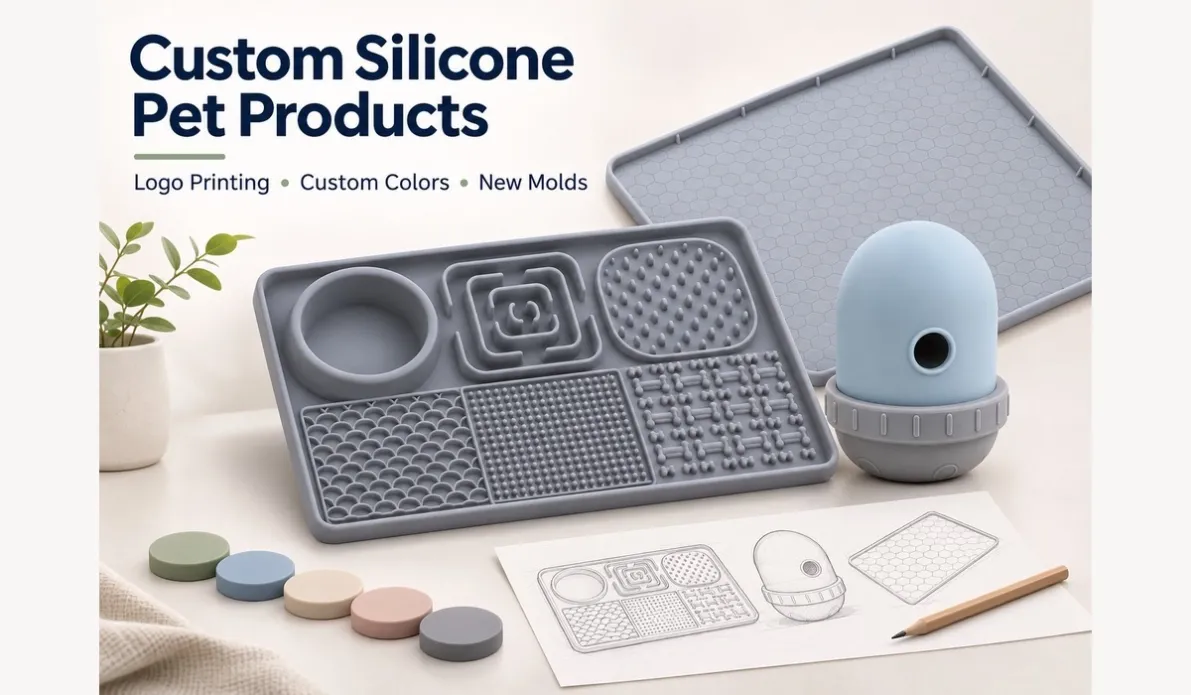
Developing a branded silicone pet product does not always require a new mold. Many projects can begin with an existing design, a printed logo and packaging that matches the brand.
Other projects need a specific silicone color, a different size or a new feeding structure. These changes involve different production requirements, minimum order quantities and sample approval steps.
For pet brands, Amazon sellers and importers, the first decision is how much of the product needs to change. This guide compares three routes: logo printing on existing products, custom colors using existing molds, and new product development.
Three Ways to Customize Silicone Pet Products
Customization Route | What Changes | When to Consider It |
|---|---|---|
Existing design with a printed logo | Branding on a suitable product surface | You like the current shape and want to launch a branded version |
Existing design with custom colors and a logo | Silicone color and branding | You want products that coordinate with your brand or collection |
Custom design with new tooling | Size, shape, texture or functional structure | Your product concept cannot be achieved with an existing mold |
Packaging can be developed alongside any of these routes. Its minimum quantity and cost should be reviewed separately from the silicone product.
An existing mold also does not guarantee ready stock. A product may use established tooling but still require production for your selected color or quantity.
Option 1: Add Your Logo to an Existing Design
Logo printing is a practical starting point when the existing product already suits your customers.
For example, a brand may select a large silicone feeding mat, a slow feeder bowl or a treat dispenser without changing its structure. The project then focuses on the logo, available colors and packaging.
Check the Logo Position First
Not every part of a silicone product is suitable for printing. Deep textures, narrow edges and curved surfaces can limit the available area.
A logo that works well on a flat mat border may need a different size or placement on a rounded treat dispenser. Send your artwork together with a marked product image showing your preferred position.
Before approving production, review:
- Logo dimensions and placement
- Number of printed colors
- Contrast against the silicone color
- Legibility of small text and fine lines
- Print appearance on the actual product
Vector artwork is useful for reviewing print details. If you only have a reference image, send it first so the artwork requirements can be assessed.
Printed and Molded Logos Are Different
A printed logo is applied to the product’s surface. An embossed or debossed logo forms part of the silicone structure.
Changing from printing to a molded logo may require a tooling modification or a new mold, depending on the design. It should be reviewed as a separate request rather than assumed to be included in standard logo printing.
Option 2: Customize the Silicone Color
Custom colors can help connect several products within one collection.
A pet food brand might coordinate its feeding mats and lick mats with its packaging. A retailer might build a neutral-colored feeding range. An enrichment brand might choose a recognizable color combination for its toys and feeding accessories.
Using an existing mold allows the shape to remain the same while the silicone color is developed for the project.
Provide a Clear Color Reference
Send a Pantone reference or a physical color sample where available. A photograph can communicate the intended direction, but lighting and screen settings affect how colors appear.
Review the proposed color in silicone before approving production. Different surface textures and product thicknesses can influence its appearance, even when the intended color is the same.
For a coordinated collection, compare the samples together under the same lighting.
Confirm Quantities for Each Color
The total order quantity is not always the quantity used to determine MOQ.
An order split between several colors may create separate production requirements for each color. Provide a breakdown by product, size and color so the quotation reflects the actual assortment.
For products with two contrasting silicone parts, specify the color of each part. Do not assume that a two-color design follows the same quotation conditions as a single-color product.
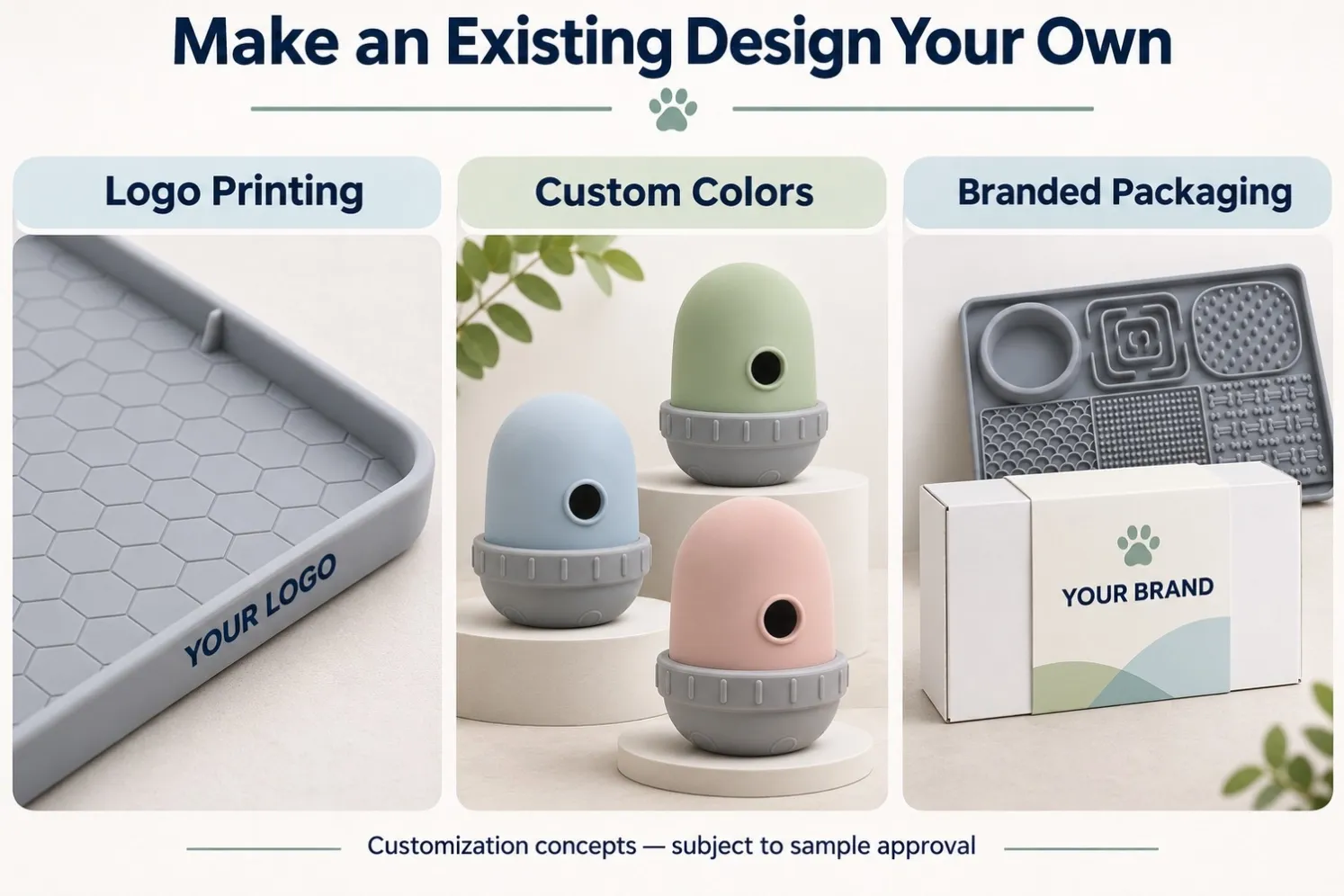
Option 3: Develop a New Product or Mold
New tooling becomes relevant when the existing range cannot provide the structure your project needs.
Examples include:
- A feeding mat with a different footprint
- A new raised-rim profile
- A different lick mat texture or feeding-zone arrangement
- A revised slow feeder channel design
- A treat dispenser with a different opening or closure
- A new product shape developed for your brand
Some changes may be possible through a tooling modification. Others require a new mold. The appropriate route depends on the existing tooling and the proposed design.
Start with the Function
A useful development brief explains what the product should do, who will use it and how it will be cleaned.
For a slow feeder, include the intended food type, portion and target pet size. For a large mat, provide the required coverage and how it will be packed. For a treat dispenser, explain the treat size, filling method and desired access for cleaning.
Drawings and reference images help communicate the concept. They should be accompanied by dimensions and functional requirements.
Separate the Development Costs
Ask for a quotation that distinguishes between:
- Design or engineering work, where applicable
- Prototype or sample costs
- Mold or tooling costs
- Unit production price
- Logo and packaging costs
Confirm tooling ownership, maintenance arrangements and any agreed exclusivity in writing. A custom color or printed logo on an existing design should not be treated as an exclusive product structure.
How MOQ Differs Between Silicone Product Types
WINWINPETS’ reference minimum quantities depend on the product category and customization route.
Product and Customization | Reference MOQ |
|---|---|
Eligible large silicone mats using existing molds, with logo customization | From 100 pcs per style and color |
Eligible large silicone mats with a custom single color and logo | From 100 pcs per style and color |
Other silicone products requiring production, with a custom logo | From 300 pcs |
Other silicone products with custom colors and a logo | From 500 pcs |
New product design and mold development | From 1,000 pcs, subject to project review |
The 100-piece MOQ applies to eligible large silicone mats. It does not automatically apply to lick mats, slow feeder bowls, treat dispensers or other silicone accessories.
Final quantities are confirmed according to the selected model, size, color, logo method and packaging requirements.
For stock inquiries, the honeycomb silicone mat range is a useful starting point. Send your preferred sizes and quantities so current availability can be checked. Adding branding may require additional processing even when the base product is available.
Examples from the Silicone Pet Product Range
Large Silicone Mats
For a feeding-area or litter-area collection, start by checking whether an existing size and texture meet your requirements.
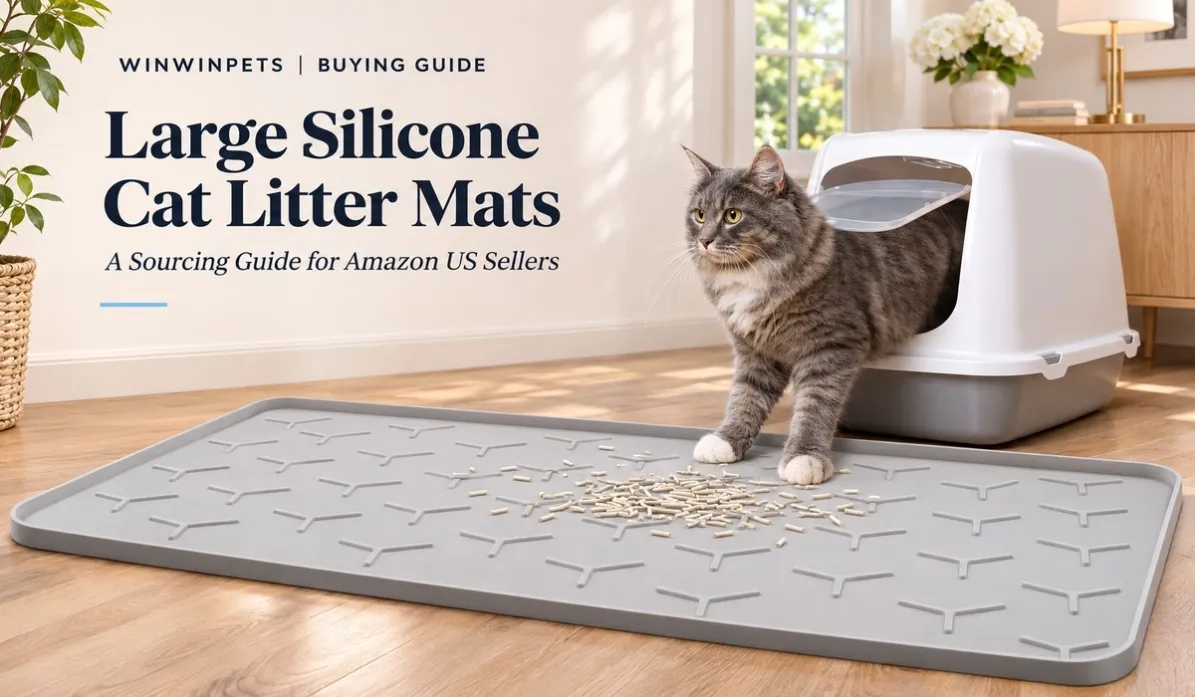
The honeycomb design has a solid silicone surface with shallow recessed hexagonal boundary grooves and a raised outer rim. The texture should be represented accurately in product photographs and packaging artwork.
If the existing structure works, logo and color customization may be sufficient. A different size, rim or surface pattern requires a separate tooling review.
Six-Zone Silicone Lick Mats
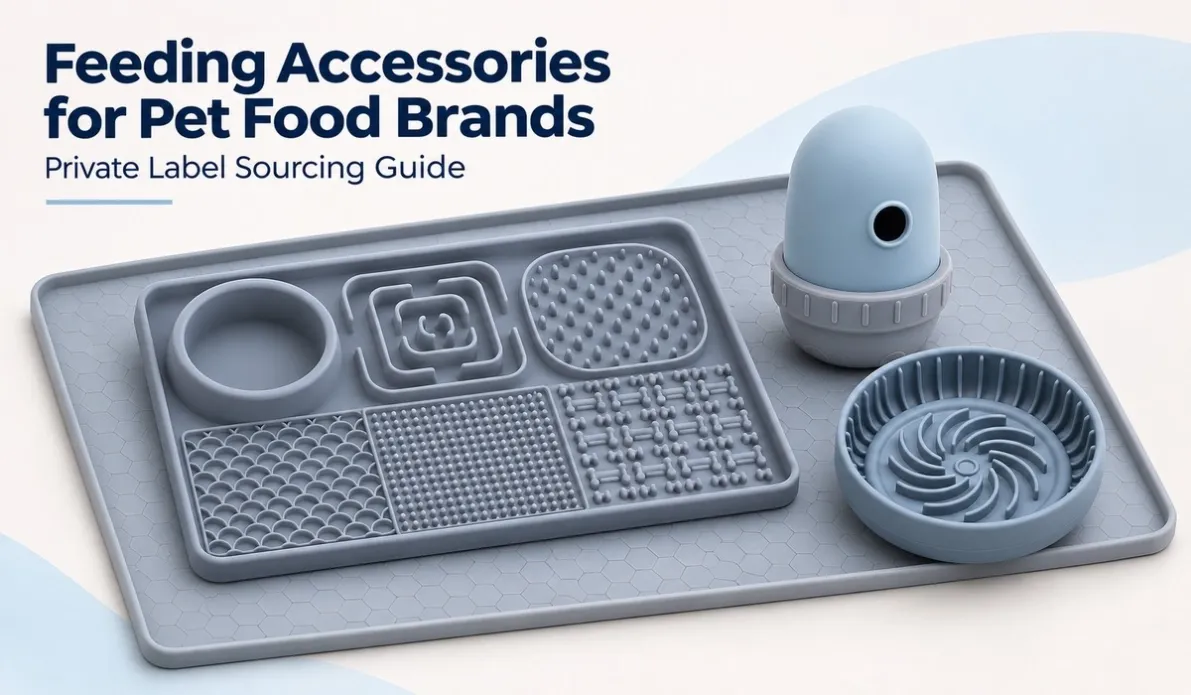
The six-zone silicone lick mat and slow feeder combines several textures and feeding sections in one product.
If the existing layout suits your collection, focus on color, a suitable logo position and branded packaging. Changing the arrangement or structure of the feeding zones moves the project into tooling review.
This product follows the MOQ requirements for other silicone feeding products, rather than the 100-piece minimum for eligible large mats.
Detachable Treat Dispensers
For the silicone treat dispensing toy, an existing design can be considered for logo and color customization.
Changes to the outlet, closure or internal structure require additional review. Test a sample with the intended treats before deciding whether a structural change is necessary.
Approve More Than the Appearance of a Sample
A branded sample should be checked as a working product.
For feeding accessories, use the food or treats you intend to recommend. Check access to food, cleaning convenience and any detachable components.
For large mats, check the size, rim, flexibility and appearance after unpacking. If the product will be folded for shipping, assess the proposed packing method with the actual sample.
A practical approval record should identify:
- Product model and dimensions
- Approved silicone color
- Logo artwork, size and placement
- Functional details that must remain consistent
- Packaging artwork and structure
- Instructions and care information
Keep product and packaging approvals clearly documented. If either changes after approval, confirm whether the price, timing or packed dimensions also change.
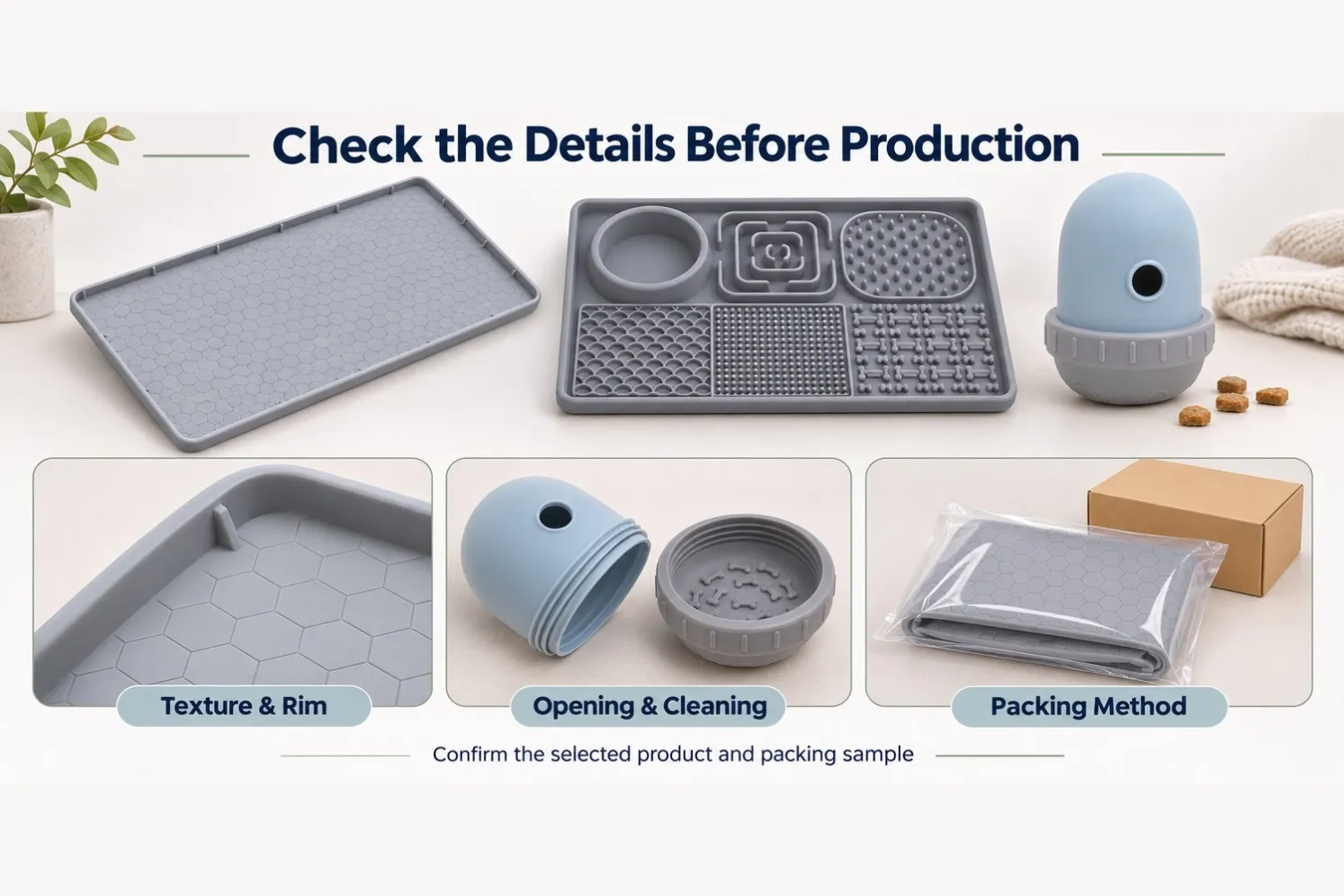
Plan Packaging Alongside the Product
Packaging can create a consistent brand presentation without changing the silicone mold.
Options may include OPP bags, paper boxes, custom color boxes and branded packaging. The suitable choice depends on the product, sales channel and intended presentation.
Large silicone mats are commonly packed folded. Products with integrated bowls or shaped structures may need a different arrangement. Confirm the final packing method before estimating shipping or fulfillment costs.
For US Amazon sellers and importers, request the individual packed dimensions and weight, units per carton, carton dimensions and gross weight. Use figures for the selected packaging version rather than assuming all packing options have the same measurements.
A product MOQ and a custom packaging MOQ can differ. Review both before committing to the launch quantity.
Which Route Should Your Brand Choose?
Choose an existing design with a printed logo when the product already meets your functional needs and you want a focused first order.
Choose custom colors and a logo when a coordinated brand appearance matters and you can support the required quantity for each product and color.
Consider a new mold when the size, structure or function is central to your product concept and cannot be achieved using the existing range.
You can also develop the collection in stages: evaluate an existing product first, confirm customer interest, then consider structural development for a later version.
Frequently Asked Questions
Do I need a new mold to add my logo?
Usually, a printed logo can be reviewed for a suitable area on an existing product. An embossed or debossed logo may require tooling changes. Send your artwork and preferred placement for confirmation.
Can I order several colors within the MOQ?
Minimum quantities may apply separately to each style, size or color. Provide the planned breakdown so the order can be reviewed accurately.
Does an existing mold mean the product is in stock?
No. Existing tooling and ready inventory are different. Some products are produced to order even though the mold already exists.
Can I start with 100 pieces?
Eligible large silicone mats start from 100 pcs under the stated customization conditions. Other silicone products requiring production generally start from 300 pcs with a logo, or 500 pcs with custom colors and a logo.
Can the packaging be customized without changing the product?
Yes. Branded packaging can be reviewed for an existing product. Packaging minimum quantities, artwork and costs are confirmed separately.
What should I send for a new design quotation?
Send reference images or drawings, intended dimensions, functional requirements, material preferences, target quantity and packaging needs. Include your target market and any specific testing requirements.
Request Wholesale Pricing or a Custom Sample
WINWINPETS supports existing-design sourcing, logo printing, custom silicone colors, branded packaging and OEM/ODM product development.
To discuss your project, send:
- The product model, reference image or design concept
- Required sizes and quantity for each color
- Logo artwork and preferred placement
- Packaging requirements
- Target market and delivery destination
We will review your requirements and confirm the appropriate customization route, MOQ, sample options and quotation details.